eo_logo
 
Product added to cart

Edmund Optics®

Knowledge Center

 Verified library of trusted technical resources created by our 240+ global engineers.

Filter
Search Results for: Machine Vision Lasers (133)

Backlight Illumination for Machine Vision

Learn about the use cases for a backlight, its advantages in industrial inspection and metrology, and the key considerations for integration into vision systems.

View Now Add to saved content

Machine Vision for Golf Simulators

Imaging lenses are critical components of the quickly-growing golf simulator market. Learn how to select the right lenses and cameras!

View Now Add to saved content

Machine Vision Filter Technology

While working with machine vision, there are different types of filters that can be used to alter the image. Find out about the different types at Edmund Optics.

View Now Add to saved content

Types of Machine Vision Lenses

Fixed focal length, zoom, and macro lenses are all variable magnification lenses. Learn more at Edmund Optics.

View Now Add to saved content

Silhouetting Illumination in Machine Vision

Choosing the right backlight illumination is critical for precise measurement and edge detection in machine vision applications. Learn about your best options!

View Now Add to saved content

Illumination Mounts for Machine Vision Applications

Explore a wide selection of machine vision lighting at Edmund Optics from top brands and download free 3D printed mounts for various lighting geometries.

View Now Add to saved content

Brightfield Illumination with Spot and Bar Lights for Machine Vision

Learn about how to show different objects (diffuse and specular) with partial brightfield illumination using a white spot light or bar light.

View Now Add to saved content

Brightfield Illumination with Dome Lights for Machine Vision

Learn about integrating brightfield dome lights into vision systems

View Now Add to saved content

Assembling Compact Machine Vision Microscopy Systems with 120i Plan APO Infinity Corrected Objectives

Reduce the size and weight of your high magnification machine vision system with infinity corrected TECHSPEC® 120i Plan APO Infinity Corrected Objectives.

View Now Add to saved content

Basics of Ultrafast Lasers

Master the fundamentals of ultrafast lasers and how to choose optics that can withstand their high powers and short pulse durations.

View Now Add to saved content

LIDT for Ultrafast Lasers

The short pulse durations of ultrafast lasers make them interact with optical components differently, impacting the optic’s laser damage threshold.

View Now Add to saved content

In-line Telecentric Illumination for Machine Vision

View Now Add to saved content

Darkfield Illumination with Ring Lights for Machine Vision

Learn more about integrating darkfield ring lights into vision systems

View Now Add to saved content

Brightfield Illumination with Ring Lights for Machine Vision

Learn more about integrating brightfield ring lights into vision systems

View Now Add to saved content

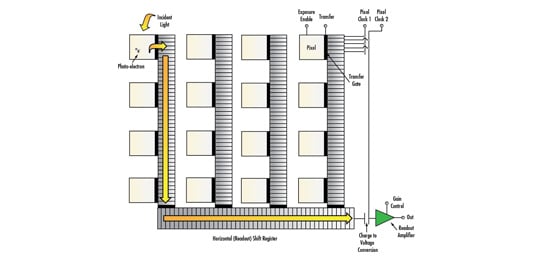
Imaging Electronics 101: Understanding Camera Sensors for Machine Vision Applications

The performance of an imaging system relies on a number of things, including imaging electronics. Before using your imaging system, learn about camera sensors at Edmund Optics.

View Now Add to saved content

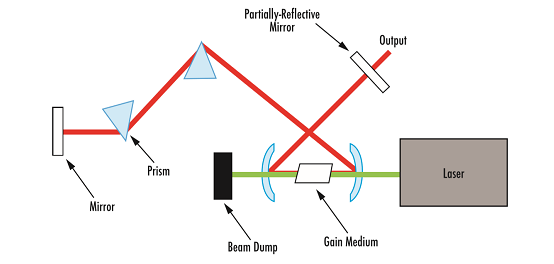
Fundamentals of Lasers

Lasers can be used for a variety of applications. Learn how lasers work, different elements, and the differences between laser types at Edmund Optics.

View Now Add to saved content

Characteristics of 2µm Lasers

Laser Optics for 2μm lasers require very specific types of materials such as fused silica and germanium. Learn more at Edmund Optics.

View Now Add to saved content

Quantum Cascade Lasers

Quantum cascade lasers (QCLs) are IR lasers that utilize tens or hundreds of quantum wells to decouple the emission wavelength from the bandgap energy.

View Now Add to saved content

Challenges of Specifying LIDT for CW Lasers

The LIDT of continuous wave (CW) lasers is dependent on laser power, beam diameter, and other use parameters.

View Now Add to saved content

Ultrafast Lasers – The Basic Principles of Ultrafast Coherence

Advances in laser technology have made it possible to produce pulses ranging from a few femtoseconds to tens of attoseconds. Learn more at Edmund Optics.

View Now Add to saved content

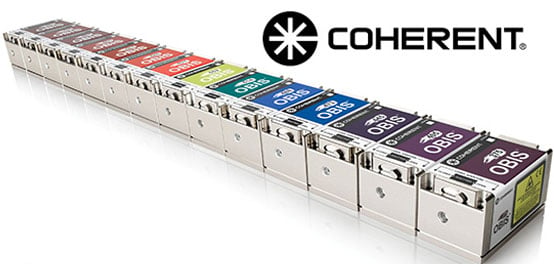
Coherent® Laser Selection Guide

Compare Coherent Laser specifications with the Edmund Optics selection guide.

View Now Add to saved content

Understanding Infinity Corrected Objective Resolving Power and Magnification

Microscopes are used in a variety of fields and applications. To understand how resolving power, magnification, and other aspects work, read more at Edmund Optics.

View Now Add to saved content

Wavelength Effects on Performance

Wavelengths can be both valuable or hazardous when trying to obtain information from an imaging system. Learn more about fixing wavelength issues at Edmund Optics.

View Now Add to saved content

The Advantages of Telecentricity

Learn more about the advantages of telecentricity, including parallax error elimination, telecentric lenses, depth of field, and distortion, at Edmund Optics.

View Now Add to saved content

Multiphoton Microscopy

Multiphoton microscopy is ideal for capturing high-resolution 3D images with reduced photobleaching and phototoxicity compared to confocal microscopy.

View Now Add to saved content

Basic Lens Selection

View Now Add to saved content

Liquid Lens Features, Applications, and Technology

Liquid lenses have many features, are small in size, and adjust focus quickly to adapt to objects located at various working distances. Learn more at Edmund Optics.

View Now Add to saved content

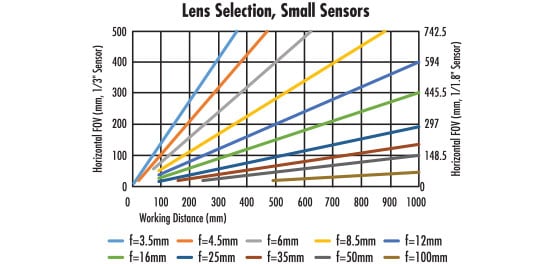
Basic Lens Selection

To decide what imaging lens is right for a system, it is important to know the parameters of the imaging system used. Learn more at Edmund Optics.

View Now Add to saved content

The Anatomy of a Lens

Become familiarized with the key components of an imaging lens assembly and how they function.

View Now Add to saved content

Laser Polarization: The Importance of Polarization in Laser Applications

Understanding the polarization of laser light is critical for many applications, as polarization impacts reflectance, focusing the beam, and other key behaviors.

View Now Add to saved content